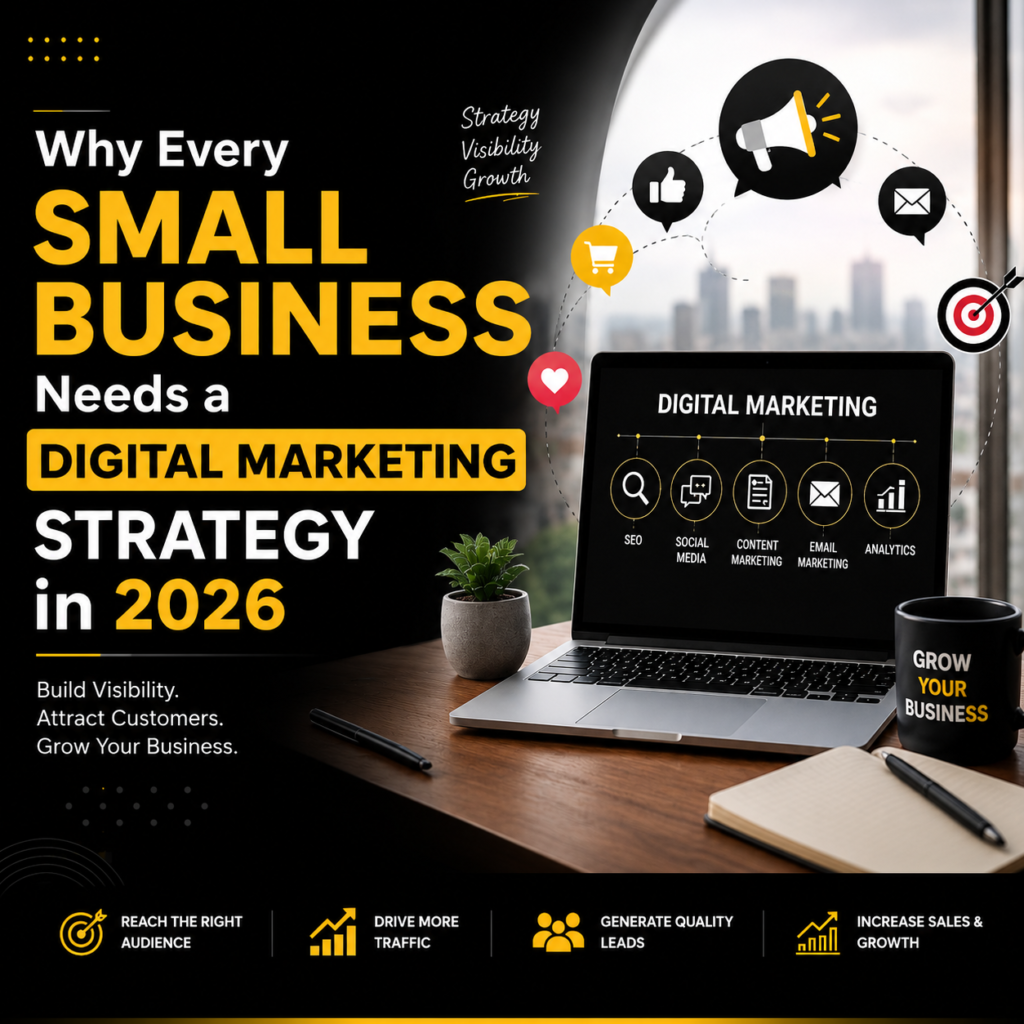
Why Every Small Business Needs a Digital Marketing Strategy in 2026
In today’s fast-moving digital world, having a great product or service is no longer enough. Small businesses must compete for attention in an increasingly crowded online marketplace. As we move into 2026, a well-planned digital marketing strategy is essential for building visibility, attracting customers, and driving sustainable growth.
The Digital Landscape Has Changed
Consumer behavior continues to evolve. Most customers now research products, compare brands, read reviews, and make purchasing decisions online before ever contacting a business. Without a strong digital presence, small businesses risk losing potential customers to competitors who are easier to find and engage with online.
A digital marketing strategy helps businesses stay relevant by connecting with customers where they spend most of their time—search engines, social media platforms, email, and mobile devices.
1. Increase Brand Visibility
One of the biggest challenges for small businesses is getting noticed. Digital marketing allows businesses to increase their visibility through:
* Search Engine Optimization (SEO)
* Social Media Marketing
* Content Marketing
* Local Search Listings
* Online Advertising
A strategic approach ensures your brand appears in front of the right audience at the right time, increasing awareness and recognition.
2. Reach the Right Audience
Traditional marketing often targets broad audiences with limited precision. Digital marketing enables businesses to target specific demographics based on:
* Location
* Age
* Interests
* Online behavior
* Purchase history
This targeted approach improves marketing efficiency and helps businesses attract customers who are more likely to convert.
3. Drive More Website Traffic
Your website serves as your digital storefront. A strong digital marketing strategy drives qualified traffic through:
* Organic search results
* Social media campaigns
* Paid advertising
* Email marketing
* Valuable content creation
More traffic means more opportunities to generate leads, sales, and long-term customers.
4. Generate High-Quality Leads
Not all leads are equal. Digital marketing helps businesses attract prospects who are actively searching for solutions.
By using lead generation tools such as:
* Landing pages
* Contact forms
* Email campaigns
* Downloadable resources
* Retargeting ads
Businesses can build a consistent pipeline of qualified prospects.
5. Build Strong Customer Relationships
Customers expect brands to engage with them online. Through social media, email marketing, and personalized content, businesses can:
* Answer customer questions
* Share updates and promotions
* Gather feedback
* Build trust and loyalty
Strong relationships often lead to repeat purchases and valuable word-of-mouth referrals.
6. Measure Results and Improve Performance
Unlike traditional marketing, digital marketing provides real-time performance data.
Businesses can track:
* Website traffic
* Conversion rates
* Engagement levels
* Lead generation
* Return on Investment (ROI)
These insights allow business owners to make informed decisions and continuously optimize their marketing efforts.
7. Stay Competitive in 2026
Competitors are investing heavily in digital marketing. Businesses that fail to adapt risk becoming invisible online.
A comprehensive strategy helps businesses:
* Strengthen their online presence
* Differentiate from competitors
* Capture market share
* Adapt to changing customer behavior
Digital marketing is no longer a competitive advantage—it’s a business necessity.
Key Components of a Successful Digital Marketing Strategy
To succeed in 2026, small businesses should focus on:
SEO (Search Engine Optimization)
Improve website rankings and increase organic traffic.
Social Media Marketing
Build brand awareness and engage with customers across relevant platforms.
Content Marketing
Create valuable blogs, videos, and resources that educate and attract potential customers.
Email Marketing
Nurture leads and maintain customer relationships through personalized communication.
Paid Advertising
Generate immediate visibility and targeted traffic through PPC and social media ads.
Analytics and Reporting
Monitor performance and make data-driven marketing decisions.
Final Thoughts
The businesses that thrive in 2026 will be those that embrace digital transformation and invest in a strategic online presence. A well-executed digital marketing strategy helps small businesses increase visibility, attract the right audience, generate quality leads, and achieve sustainable growth.
Whether you’re launching a new business or looking to scale an existing one, now is the time to build a digital marketing strategy that positions your brand for long-term success.
Build Visibility. Attract Customers. Grow Your Business. That’s the power of digital marketing in 2026.